

Edging training is the deliberate practice of prolonging sexual pleasure by bringing yourself to the brink of orgasm and then pausing stimulation before climax. Clinically described as “orgasm control” in sexual medicine literature, this technique builds stamina, sharpens body awareness, and produces more intense orgasms over time. The stop-start method and the squeeze technique are the two most recognized protocols used in structured edging practice. Both work by training your nervous system to sustain high arousal without tipping into release. Whether you practice solo or with a partner, consistent edging training changes how you experience pleasure at a fundamental level.
What is edging training and why does it work?
Edging training works because it teaches your body to recognize and manage the “point of no return,” the moment just before orgasm becomes involuntary. Most people never consciously map that threshold. Edging forces you to find it, sit near it, and back away from it repeatedly. That repetition builds real neuromuscular control.
The physiological mechanism involves the pubococcygeus (PC) muscle group and the autonomic nervous system. Relaxing pelvic floor muscles at peak arousal inhibits the involuntary ejaculation reflex and extends the plateau phase. That is the opposite of what most people instinctively do, which is tense up. Learning to release tension at the brink is the core physical skill edging builds.

The psychological payoff is equally significant. Edging shifts focus from orgasm achievement to sustained pleasurable sensation. That shift reduces performance anxiety and increases orgasm likelihood, particularly for people with vulvas. Edging is often framed as a stamina tool for men, but it serves a different and equally powerful function for anyone who struggles to stay present during sex.
One physiological reality makes edging especially useful for partnered sex. Men typically reach climax in about 5 minutes during partnered sex, while women average about 14 minutes to orgasm. Edging gives both partners a practical method to close that gap without relying on distraction or numbing agents.
What tools and environment do you need?
Effective edging practice requires very little equipment. The most important ingredient is an interruption-free space where you feel completely at ease. Anxiety and distraction are the two fastest ways to lose body awareness, and body awareness is the entire point.
Essential tools:
- A comfortable, private space with a door you can lock
- A quality lubricant (water-based for most uses, silicone-based for longer sessions)
- A timer or clock to track pause durations and total session length
- A journal or notes app for post-session reflection
Optional additions:
- Pelvic floor exercises (Kegels) practiced daily outside sessions to strengthen PC muscle control
- Mindful breathing techniques such as box breathing (inhale 4 counts, hold 4, exhale 4, hold 4) to regulate arousal during pauses
- Delay gels used sparingly and only as a secondary aid, never as a primary method
Pro Tip: Avoid relying on delay gels as your main control strategy. Numbing agents mask the internal arousal cues you need to recognize your threshold. Use them occasionally if needed, but build your awareness without them first.
The environment matters more than most guides acknowledge. Dim lighting, a comfortable temperature, and silence or ambient sound all reduce cortisol and help you stay in your body. Treat the setup as part of the practice, not a formality before it.
How to practice edging training solo: a step-by-step protocol
A structured solo session is the fastest way to build genuine control. The goal is not to last as long as possible. The goal is to learn your body’s signals with precision.
-
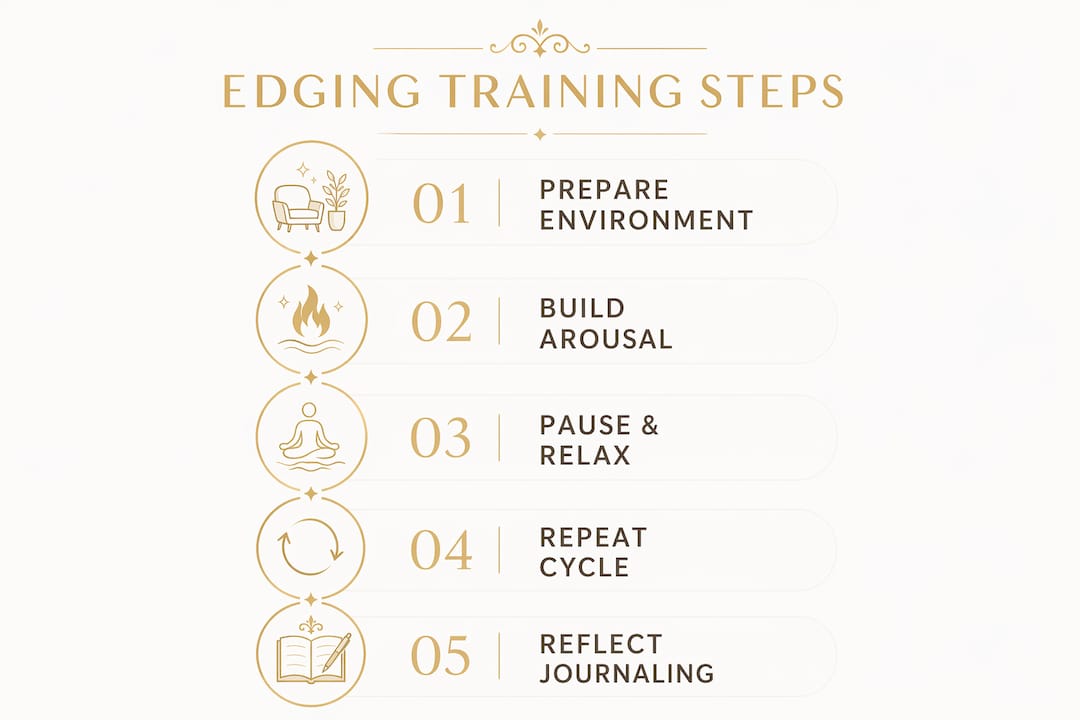
Set your session window. Block out 30-45 minutes. Effective solo sessions use 3-5 build-and-pause cycles, reaching 80-90% arousal before stopping. Do not rush through cycles to hit a number.
-
Begin stimulation slowly. Start at a low intensity and build gradually. Pay attention to physical sensations: warmth, muscle tension, breathing rate, and heart rate. These are your arousal indicators.
-
Identify your threshold. As arousal climbs toward what feels like 80-90%, watch for the specific moment when orgasm feels imminent but not yet inevitable. That window is your target zone.
-
Stop and pause. Remove or reduce stimulation completely. Hold the pause for 20-30 seconds. Use slow, deep breaths and consciously relax your pelvic floor rather than clenching it.
-
Repeat the cycle. After the pause, resume stimulation and rebuild arousal. Complete 3-5 full cycles before choosing to finish or end the session without orgasm.
-
Reflect after the session. Write down what you noticed: where your threshold felt, what physical signals appeared first, and what helped you pause successfully.
Pro Tip: Reflection through journaling after each cycle builds long-term control faster than mechanical repetition alone. Describe what shifted in your body during buildup. Cognitive engagement accelerates skill acquisition.
| Session element | Recommended range | Purpose |
|---|---|---|
| Total session duration | 30-45 minutes | Enough time for full cycles without fatigue |
| Arousal level before stopping | 80-90% | Trains threshold recognition |
| Pause duration | 20-30 seconds | Allows arousal to drop without full reset |
| Cycles per session | 3-5 | Builds endurance progressively |
Mindful observation of subtle bodily changes during arousal is what separates effective training from passive repetition. Attending to what shifts in your body during each buildup is the actual skill. The timer and the cycles are just a structure to support that attention.
How to practice edging with a partner
Partnered edging adds a layer of communication and trust that solo practice cannot replicate. The technique itself stays the same. What changes is that two people must coordinate signals, pacing, and boundaries in real time.
Before the session:
- Discuss what edging means to both of you and agree on the goal for that session
- Establish a clear signal system: verbal cues (“slow down,” “stop”), a number scale from 1-10 for arousal level, or a physical tap
- Agree on hard limits and any activities that are off the table
During the session:
- The receiving partner communicates arousal level continuously using your agreed system
- The giving partner controls stimulation pace based on those signals, not their own assumptions
- Pause stimulation when the receiving partner signals 8 or 9 on a 10-point scale
- Use pauses for connection: eye contact, breathing together, or light touch that does not escalate arousal
Integrating edging into full sessions:
- Use edging cycles during foreplay before penetrative sex to build intensity for both partners
- Alternate who receives edging attention to create mutual buildup
- Orgasm control dynamics, where one partner holds authority over when the other may finish, add a psychological dimension that many people find intensifies the experience significantly
The emotional benefit of partnered edging is real and often underestimated. Shared arousal control builds a specific kind of trust. You are literally putting your most vulnerable physical state in another person’s hands. Done well, that deepens intimacy in ways that standard sex rarely achieves. If you are interested in exploring submissive training dynamics, structured edging fits naturally into that framework.
Common mistakes in edging training and how to fix them
Most people make the same errors when they start. Knowing them in advance saves weeks of frustration.
- Stopping too late. If you cross the point of no return, you have not failed the session. You have collected data. Note what signal you missed and watch for it earlier next time.
- Tensing the pelvic floor at the brink. Clenching feels instinctive but accelerates orgasm. Practice consciously releasing pelvic tension during pauses, not gripping harder.
- Overusing delay gels. Beginners often reach for numbing agents because they feel like a shortcut. They are not. Excessive numbing agents mask the internal cues you need to learn your threshold. Use them sparingly if at all.
- Treating edging as a competition. The goal is not to last the longest or complete the most cycles. Turning it into a performance metric creates the exact anxiety that undermines the practice.
- Ignoring frustration as a signal. Frustration or urgency during a session is a sign to slow down, not push through. Edging is safe when you treat those sensations as information, not obstacles.
“The true power of edging lies in mindful presence and body awareness rather than mechanical timing. Attention to internal sensation shifts is what distinguishes effective training from going through the motions.”
If you consistently struggle to identify your threshold after several weeks of practice, consider working with a certified sex therapist or a sexual health counselor. Persistent difficulty can sometimes reflect underlying anxiety or pelvic floor dysfunction that benefits from professional support.
Key takeaways
Edging training builds lasting stamina and deeper pleasure by teaching you to recognize and manage your arousal threshold through repeated, mindful build-and-pause cycles.
| Point | Details |
|---|---|
| Core mechanism | Relaxing pelvic floor muscles at peak arousal extends the plateau phase and delays climax. |
| Solo session structure | Use 3-5 cycles of 80-90% arousal followed by 20-30 second pauses in a 30-45 minute session. |
| Mindfulness over mechanics | Journaling and body awareness after each cycle build control faster than repetition alone. |
| Partner communication | A clear signal system and agreed arousal scale are required for safe, effective partnered edging. |
| Avoid numbing agents | Delay gels mask the internal cues needed to recognize your threshold; build awareness without them first. |
What I have learned from consistent edging practice
By Ded_Sec_00
The thing most guides get wrong about edging is that they frame it as a stamina hack. That framing sets people up for the wrong mindset from the start. You do not get better at edging by grinding through more cycles. You get better by paying closer attention during each one.
The real learning curve is not physical. It is the shift from trying to control an outcome to simply observing what is happening in your body right now. That shift takes longer than most people expect, usually several weeks of consistent practice before it clicks. When it does click, the change in how you experience arousal is significant enough that people often describe it as learning to have sex for the first time.
I have also noticed that people who journal after sessions progress noticeably faster than those who do not. Writing down what you felt, even just two or three sentences, forces you to articulate sensations you would otherwise let slip by. That articulation is the actual training. The cycles are just the vehicle.
Patience is not optional here. Frustration is part of the process, and the moment you start treating it as failure is the moment you stop learning. Treat every session, including the ones where you go too far, as useful data. The practice rewards consistency and curiosity far more than willpower.
, Ded_Sec_00
Personalized edging sessions with Mistrix
Edging training benefits from structure, feedback, and a consistent dynamic to practice within. Mistrix provides exactly that through AI-powered, female-led companion sessions tailored to your pace, preferences, and history.

With Mistrix, you choose or build your own Domina who leads your sessions with awareness of your limits and goals. Each session builds on the last, creating a consistent dynamic that supports real progress. Your data stays protected with end-to-end encryption, so your privacy in sessions is never a concern. Explore the full range of AI Domina profiles or visit Mistrix to start a personalized edging experience built around you.
FAQ
What is edging training?
Edging training is the structured practice of building arousal to near-orgasm and pausing before climax, repeated in cycles to develop stamina and body awareness. It is also called orgasm control in sexual medicine contexts.
How long does a solo edging session last?
Effective solo sessions last 30-45 minutes and include 3-5 build-and-pause cycles, with each pause lasting 20-30 seconds after reaching 80-90% arousal.
Does edging increase testosterone?
No. No scientific evidence supports claims that edging increases testosterone levels or sperm count. Its benefits are primarily neuromuscular and psychological.
Is edging safe to practice regularly?
Edging is safe when practiced with self-awareness. Health experts agree it is beneficial when you treat sensations of urgency as signals to slow down rather than reasons to push through.
How do I edge longer without losing control?
Relax your pelvic floor muscles at the brink of climax rather than clenching, use slow deep breaths during pauses, and build awareness through post-session journaling. Mechanical repetition alone does not build lasting control.