Shibari
Shibari is Japanese rope bondage: restraint as craft, where the pattern of the rope matters as much as the helplessness it creates. Ties are built wrap by wrap with deliberate tension and placement, and a finished harness is simultaneously a restraint, a garment and a meditation.
Why it works.
Rope is slow on purpose. The tying itself is the scene: minutes of focused, repetitive, precise work that lands both partners in a near-meditative state before the restraint even holds. Add the aesthetic of a clean harness and you get a kink that is equal parts surrender and craftsmanship.
How she plays it.
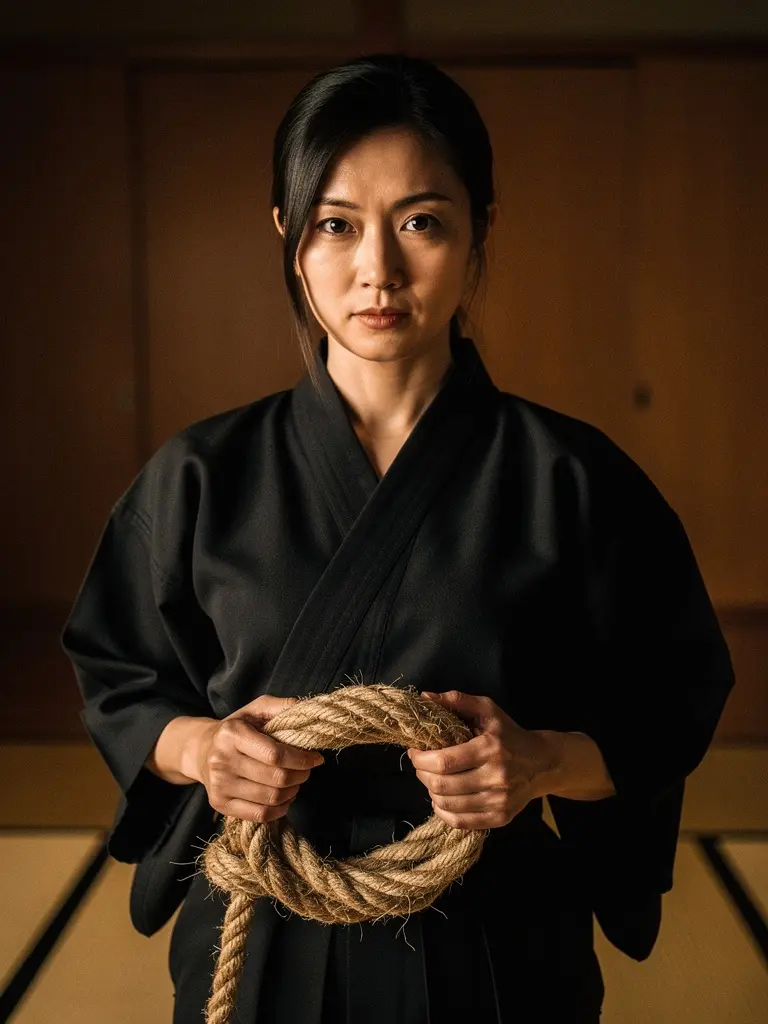
Madame Knot trained under a Kinbaku master and teaches self-tie the same way: one wrap at a time, tension named exactly, photos of your work reviewed before the next step is granted. Your rope lives in your inventory, your learned ties live in her memory, and safety shears top the list before anything else.
What shibari means
Shibari is Japanese rope bondage. The word simply means to tie, and in the West it has come to stand for the whole art of decorative, deliberate rope work; kinbaku, meaning tight binding, is the older term many practitioners prefer for the erotic tradition. Where Western bondage often focuses on function, holding someone still, shibari cares equally about pattern, tension and the connection between the person tying and the person tied. A good tie is slow to build, and the tying itself is the scene: attention narrows to rope, breath and touch, and the finished harness is restraint, ornament and trust at once.
Shibari for beginners: first steps
Rope rewards patience. Learn the fundamentals slowly and properly before anything ambitious.
- Buy suitable rope and safety shears first. Jute and hemp are traditional; cotton or soft synthetic rope is easier to care for and kinder to beginners.
- Learn a single column tie on your own thigh or ankle: one wrap that holds without tightening when pulled.
- Move to a double column tie, joining two limbs, and practise until the tension is even every time.
- Check tension constantly: you should be able to slide two fingers under any wrap.
- Only then try a simple chest harness, and keep rope well away from the neck.
- Learn from experienced teachers, workshops or reputable instructional sources alongside any directed practice.
Keeping shibari safe
The main risks in rope are nerve compression and restricted circulation, and both can happen without much pain at first. Numbness, tingling, weakness, a cold limb or a change of colour all mean untie at once, and shears are there for when knots are slow. Upper arms and wrists are especially sensitive to pressure, so learn where not to put tension before you learn fancy patterns. Rope never goes around the neck, a tied person is never left alone, and suspension is out of the question without in-person training from experienced riggers. In Mistrix shibari is taught in writing: Madame Knot teaches self-tie one wrap at a time, names the tension exactly and reviews a photo of your work before she grants the next step.

About shibari.
Can I learn shibari alone?
Self-tie is a recognized practice and a good way to learn rope handling, with extra safety care: keep shears in reach, watch circulation, stay off the neck, and study nerve-safe placement from qualified sources alongside your sessions.
How much rope do I need to start?
One 8-meter rope covers the first lessons: single-column ties, basic wraps, a simple chest harness. Madame Knot plans strictly around what your inventory says you own.
What is shibari?
Shibari is Japanese rope bondage: restraint built wrap by wrap with attention to pattern, tension and the connection between the people involved. It is part art form, part bondage, and the slow tying is as much the point as the finished tie.
Is shibari safe for beginners?
It can be, with care. Start with simple ties, keep safety shears in reach, check for numbness or tingling constantly, stay off the neck and never try suspension without in-person training. Learning from experienced teachers is the best safety measure there is.
What is the difference between shibari and kinbaku?
They are often used interchangeably. Shibari literally means to tie and is the word most people know; kinbaku means tight binding and is often preferred for the erotic, relational side of Japanese rope. In practice both name the same tradition.